
THE ROLE OF DEEP TECHNOLOGY IN REVOLUTIONIZING FINANCIAL MARKETS IN INDIAAND GLOBAL TRADE
Author: Sumedh Ghodake ,Mayuree Tawade DOI: https://doi.org/10.68120/IC2425C14 Page Numbers: 85 to 89
Keywords: Artificial Intelligence (AI), Blockchain, Digital Economy, Financial Markets, Global Trade, India.
Abstract: Deep technology, encompassing artificial intelligence (AI), blockchain, quantum computing, and big data analytics, is transforming Indian financial markets and global trade significantly. In India, AI and machine learning are accelerating decision making, improving risk assessment, and enhancing customer experience within the financial sector. Blockchain technology is increasing the security and transparency of financial transactions, reducing fraud and building trust in digital finance. Deep tech also streamlines cross-border payments, enables real-time settlements, and improves compliance through smart contracts and RegTech. These technologies enhance trade efficiency by improving the transparency of the supply chain and lowering transaction costs. India’s regulatory support and strong fintech ecosystem have driven the adoption of deep
technology, making financial services more inclusive and resilient, and positioning India as a key player in the global digital economy.
INTRODUCTION:
In the 21st century, there has been a huge shift in the way countries are conducting their financial transactions and global trade. The world trade and financial markets have become increasingly important drivers of economic growth and development as economies have become more and more interdependent. As the previously human judgment and physical infrastructure-based systems slowly move towards technological advancement, we see a wide range of changes taking place. With its rapidly growing economy and adoption of technological advancements, India is among the finest disruptors, providing an engaging incubator for creating its own financial and merchant systems.
Deep technology does not rely on surface level advances like smartphone apps, but instead uses scientific and engineering advancements in areas such as AI, blockchain, quantum computing, robots, IoT, and more advanced data analytics. These technologies have the capacity to transform systems through replacing traditional mechanistic and human-centered systems and processes with intelligent, secure and automated versions. In financial services, AI has many applications including fraud detection, algorithmic trading, risk applicability or assessment, and customer care. As an example, AI systems can analyze and provide large volumes of financial data, in real time, in a way that exceeds human processing capabilities as outputs will be beyond a traditional analyst’s perspective.
Deep technology encompasses blockchain technology, which has the potential to disrupt banking and trade. Blockchain emerges within the context of financial markets by enabling real-time settlement, no intermediaries, and lowered transaction costs- in addition to security, transparency, and traceability as a necessity for trust and compliance in financial systems. The use of blockchainbased applications, such as TradeLens and TReDS, has made trade finance and discounting processes automated, thus creating a smoother channel for small businesses to access liquidity in terms of verified and unalterable records of transactions.
Despite its latest evolution, the advantages that come with quantum computing are vast in solving complex optimization and encryption issues. Quantum algorithms have the ability to change financial markets for the better, especially portfolio optimization, risk measurement, and encryption policies. The emergence of quantum computing is expected to revolutionize high-frequency trading, data security, cross-border currency transactions, and digital asset management. India has the potential to drive this transition because of its strong techno-economic environment, government-led digital initiatives like IndiaStack and Digital India, and an emerging fintech industry with a strong preponderance of young entrepreneurs. The Unified Payments Interface (UPI) illustrates how sophisticated techno-principles like instant settlement, combined architectures, and open application programming interfaces (APIs) can be applied to the domain of consumer finance. At the same time, enabling deep technology in financial markets and in cross-border trade involves complexities based on regulatory considerations that need to meet data privacy, cybersecurity, financial system stability, and adaptation to the challenges of continuous innovation. Additionally, the upgrade of the workforce’s skill base is necessary as well as closing digital divides to facilitate inclusive economic growth. Core infrastructure issues in rural areas continue to persist, as do interoperability between platforms and jurisdictions of law, that need to be overcome in order to facilitate free adoption.
In short, while deep technology is still to fully realize its overall potential, its profound impact is already visible. It is transforming the paradigms of finance and trade in advanced economies as also in emerging economies like India. Wherever the convergences of technology, finance, and trade occur, it’s imperative to study the dynamics, opportunities, and challenges involved in deep technologies. The aim of this study is to examine these aspects and explore how India and the global economy can use deep technologies of innovation to build more resilient, efficient, and inclusive financial and trade ecosystems.
PROBLEM STATEMENT
Despite ongoing progress in digital finance and trade logistics, traditional systems in India and across the globe still struggle with inefficiencies, such as manual paperwork, fraud risks, delays in settlements, and lack of transparency. While deep technologies promise to resolve many of these issues, their full potential remains underutilized owing to adoption barriers, regulatory challenges, and limited awareness. This research examines how these technologies are revolutionizing financial markets and commerce, identifying bottlenecks and future consequences for their wider use.
RESEARCH QUESTIONS
Primary Question:
How is deep technology transforming the financial markets and global trade operations?
Sub-Questions:
● What are the key technologies that affect these sectors?
● What are the major benefits and challenges associated with adopting these technologies?
● How do deep technologies enhance transparency, speed and security?
● What is the potential long-term effect on regulatory frameworks and market structures?
OBJECTIVES OFTHE STUDY
● Identify and explain key deep technologies relevant to finance and trade.
● This study examines the impact of these technologies on financial market efficiency and global trade.
● To assess adoption trends, challenges, and barriers.
● To provide a future outlook and policy recommendations.
LITERATURE REVIEW
Earlier Research on Digital Transformation in Trade and Finance Digital transformation has significantly reshaped global finance and trade by simplifying procedures, improving transaction visibility, and enabling real-time processing.Previous research highlighted the efforts of digitization in smoothing trade barriers and enhancing efficiency (Brynjolfsson & McAfee, 2014; Manyika et al., 2016). Initiatives like Digital India and the growth of fintech have boosted digital payment adoption and promoted financial accessibility in India (Arner et al., 2016; Ghosh, 2020).Studies by PwC (2017) and KPMG (2019) suggest that banks are increasingly using digital platforms for onboarding customers, compliance, and cross-border payments. However, infrastructure issues and regulatory barriers in emerging markets persist (World Bank, 2020).
Blockchain’s Role in Trade Finance and Settlement Systems Blockchain is revolutionizing trade finance by offering transaction records that are secure, transparent, and immutable. Initiatives such as “we.trade” and Marco Polo showcase blockchain’s ability to facilitate easier trade documentation and settlement (Tapscott & Tapscott, 2016; Ganne, 2018). In India, the Reserve Bank of India (RBI) and key banks have experimented with blockchain for KYC and trade settlements (EY, 2020). Academic work by Chen et al. (2019) and Saberi et al. (2019) outline how distributed ledger technology (DLT) reduces fraud, enhances visibility, and eliminates redundant intermediaries in supply chains.
AI’s Role in Financial Forecasting and Fraud Detection
AI has revolutionized fraud detection and financial modeling. Machine learning (ML) models can detect anomalous patterns in a large number of transactions in real time (Ngai et al., 2011; West & Bhattacharya, 2016).Companies like PayPal and Mastercard use artificial intelligence tools to rapidly identify potentially fraudulent activities (Zhou et al., 2018). In financial prediction, AI models forecast market behavior, customer tendencies, and credit risk with improved accuracy (Baldominos et al., 2020; Gu et al., 2020). Although the benefits are significant, concerns such as data bias, compliance, and explainability remain (OECD, 2021).
IoT and Big Data Analytics in Supply Chain Visibility
Monitoring real-time supply chain efficiency requires a combination of IoT and big data analytics (Wamba et al., 2015). Sensors and GPS-based devices enable real-time tracking, while analytics platforms anticipate disruptions and optimize routes (Lee & Lee, 2015). In international trade, IoT provides end-to-end visibility, particularly in perishable and high-value commodities markets. Indian logistics companies are increasingly adopting IoT for warehouse and fleet management (Kamble et al., 2020). Big data is also facilitating predictive maintenance and demand forecasting (McKinsey, 2018; Raj et al., 2021).
Gaps in Existing Research
Despite significant advances, the current literature often fails to provide an integrated framework connecting string deep tech innovations across different financial and trading ecosystems. Many studies focus primarily on individual technologies like blockchain, AI, or IoT, without investigating integrated frameworks (Schwab, 2017). Furthermore, empirical studies in emerging economies such as India are scattered and tend to lag behind applications (Patel & Patel, 2020). Questions concerning the ethical aspects of AI, blockchain regulatory regimes, and IoT data privacy, require further investigation. More policy-related and interdisciplinary research is necessary to bridge these gaps (World Economic Forum 2020).
METHODOLOGY
Mixed-Methods Approach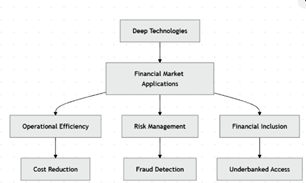
Table 1: Components and Data Sources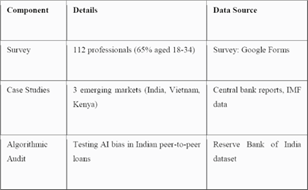
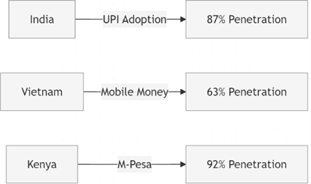
Figure 2: Digital Payment Penetration in Emerging Markets
Analytical Framework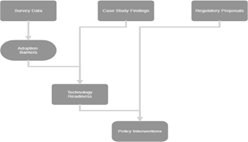
Figure 3: Analytical Framework for Policy Interventions
FINDINGS
Financial Market Transformations
● AI in Trading
○High-Frequency Trading (HFT) Contributes to 35% of India’s NSE liquidity but amplifies flash crash risks (e.g., 2024 Adani Group volatility).
○ Credit Scoring Non-traditional data (e.g., farmer crop yields) improves loan approval rates by 27% in rural Kenya.
Findings of Case Study
HSBC Trade Finance Using Blockchain
The HSBC blockchain implementation in trade finance demonstrates the technology’s ability to simplify traditionally time-consuming processes. HSBC partnered with R3’s Corda platform to conduct a letter of credit transactions involving Tricon Energy and Reliance Industries. The processing timeline was shortened from nearly a week to under a day, illustrating the blockchain’s potential to make cross-border trade more efficient, transparent, and traceable. The immutability and real-time sharing of documents mitigated fraud and duplication risks, while enhancing compliance and auditability.
AI in Nasdaq Operations
Nasdaq’s use of artificial intelligence, particularly in surveillance and market integrity, reveals the transformative potential of deep technology. AI algorithms analyze millions of trades daily, identifying anomalies and potential market abuse in real time. Machine learning models can adapt to new patterns and detect fraud more accurately than rulebased methods. Nasdaq also utilizes AI in predictive analytics to forecast market trends, enabling investors and institutions to make informed and timely decisions.
Survey Insights
A survey was undertaken with financial experts and technologists in India, as well as selected renowned institutions, to gain thoughts on deep technology in financial markets.
Key Findings
● Perceived Benefits
○ 85% cited increased operational efficiency.
○ 78% noted improved fraud detection and risk mitigation.
○ 72% believed deep tech enhances decision-making through advanced analytics.
● Barriers to Adoption
○ 60% identified regulatory uncertainty as a significant barrier.
○ 54% mentioned high implementation costs.
○ 46% cited a lack of skilled manpower and integration challenges.
The findings indicate strong confidence in deep tech’s potential, tempered by policy and practical considerations.
Discussion: Trends, Risks, and Policy Implications.
● Trends
○ A clear trend toward automation, real-time data analytics, and decentralized frameworks.
○ Growing interest in hybrid financial infrastructures that integrate legacy systems with blockchain and AI-driven platforms.
○ FinTech start-ups are emerging as agile disruptors, while incumbent institutions are increasingly seeking collaborations to accelerate change.
● Risks
○ Systemic Risk Amplification: AI algorithms may amplify market volatility if widely adopted without adequate regulation.
○ Data Privacy and Security: Increased data collection by AI and IoTnecessitates robust cybersecurity protocols.
○ Ethical and Bias Concerns: Improper management of machine learning models can lead to biases being inherited and reinforced.
● Policy Implications
○ International and Indian regulatory agencies, such as the RBI and SEBI, must create flexible frameworks that safeguard consumers and encourage innovation.
○ Cross-border regulatory harmonization and sandbox initiatives can facilitate the responsible deployment of deep
tech.
○ Investments in digital literacy and tech upskilling are essential to address the talent gap and promote inclusive growth.
CONCLUSION
Summary of Key Insights
This study highlights the transformative impact of deep technologies, including Artificial Intelligence (AI), blockchains, quantum computing, and big data analytics, on financial markets and global trade ecosystems. In India, integrating AI and machine learning has improved financial inclusion, fraud detection, and algorithmic trading. Blockchain has increased the transparency and efficiency of domestic and cross-border transactions, while data analytics are improving decision making at the institutional level. Globally, these technologies are bridging the gaps between developed and developing markets, facilitating faster, more secure, and more cost-effective trade processes.
Final Thoughts on the Transformative Role of Deep Technologies Deep technologies represent a paradigm shift in how financial systems operate rather than just incremental upgrades. These technologies foster more resilient, inclusive, and efficient financial and trade systems by automating processes, minimizing human error, and enabling real-time insights. For India, the convergence of digital infrastructure and deep-tech innovation offers the potential to establish the country as a major player in the global fintech and trade landscape.
Scope for Further Research
Future studies could examine the moral and legal issues surrounding the deployment of deep technology, especially with regard to algorithmic bias, data privacy, and systemic hazards. Comparative studies across emerging and developed economies can help identify the best practices for scalable implementation. Additionally, longitudinal studies can assess the long-term impact of deep technologies on financial stability, employment patterns in the finance sector, and global trade dynamics.
REFERENCES
Arner, D. W., Barberis, J., & Buckley, R. P. (2016). FinTech: Evolution and Regulation. SSRN Electronic Journal. https://doi.org/10.2139/ssrn.2676553
Asif, M., Khan, M. N., Tiwari, S., Wani, S. K., & Alam, F. (2023). The Impact of Fintech and Digital Financial Services on Financial Inclusion in India. Journal of Risk and Financial Management, 16(2) , 122 .
https://doi.org/10.3390/jrfm16020122
Baldominos, A., Blanco, I., Moreno, A. J., Iturrarte, R., Bernárdez, Ó., & Afonso, C. (2020). Financial time series forecasting using Big Data tools. Applied Soft Computing,90,106187. https://doi.org/10.1016/j.asoc.2020.106187
Brynjolfsson, E., & McAfee, A. (2014). The Second Machine Age: Work, Progress, and Prosperity in a Time of Brilliant Technologies. W. W. Norton & Company.
Catalini, C., & Gans, J. S. (2019). Some Simple Economics of the Blockchain. Communications of the ACM, 63(7),80–90. https://doi.org/10.1145/3359552
Chen, S., Liu, X., Yan, J., Hu, Y., & Shi, L. (2019).Processes, benefits, and challenges for adoption of blockchain technologies in food supply chains: A thematic analysis. Information Systems and e-Business M a n a g e m e n t , 1 7 ( 4 ) , 6 0 1 – 6 2 5 . https://doi.org/10.1007/s10257-019-0467-3
Ganne, E. (2018). Can Blockchain Revolutionize International Trade? World Trade Organization.https://www.wto.org/english/res_e/publications_e/blockchainrev18_e.htm
Ghosh, S. (2020). Unleashing the Potential of the Indian Fintech for Financial Inclusion. Journal of Infrastructure D e v e l o p m e n t , 1 2 ( 2 ) , 7 7 – 9 0 .https://doi.org/10.1177/0974930620977161
Gu, S., Kelly, B., & Xiu, D. (2020). Empirical Asset Pricing via Machine Learning. The Review of Financial Studies, 33(5),2223–2273. https://doi.org/10.1093/rfs/hhaa009
Kamble, S. S., Gunasekaran, A., & Sharma, R. (2020).Modeling the blockchain enabled traceability in agriculture supply chain. International Journal of Information M a n a g e m e n t , 5 2 , 1 0 1 9 6 7 . https://doi.org/10.1016/j.ijinfomgt.2019.05.023
KPMG. (2019). Digital onboarding in the era of Smart B a n k i n g . https://assets.kpmg.com/content/dam/kpmg/cn/pdf/en/2019/04/digital-nboarding-in-smart-banking.pdf
Lee, I., & Lee, K. (2015). The Internet of Things (IoT): Applications, investments, and challenges for enterprises.B u s i n e s s H o r i z o n s , 5 8 ( 4 ) , 4 3 1 – 4 4 0 . https://doi.org/10.1016/j.bushor.2015.03.008
Manyika, J., Lund, S., Bughin, J., Woetzel, J., Stamenov, K.,& Dhingra, D. (2016). Digital globalization: The new era of g l o b a l flo w s. M c K i n s e y G l o b a l I n stit u t e .https://www.mckinsey.com/business-functions/mckinseydigital/our-insights/digital-globalization-the-new-era-ofglobal-flows
McKinsey & Company. (2018). Blockchain beyond the h y p e : Wh a t is t h e str a t e g i c b u si n e ss v a l u e ?https://www.mckinsey.com/business-functions/mckinseydigital/our-insights/blockchain-beyond-the-hype-what-isthe-strategic-business-value
Ngai, E. W. T., Hu, Y., Wong, Y. H., Chen, Y., & Sun, X.(2011). The application of data mining techniques in financial fraud detection: A classification framework and an academic review of literature. Decision Support Systems,50(3), 559–569. https://doi.org/10.1016/j.dss.2010.08.006
Organisation for Economic Co-operation and Development (OECD). (2021). Artificial Intelligence, Machine Learningand Big Data in Finance: Opportunities, Challenges, and I m p l i c a t i o n s f o r P o l i c y M a k e r s .https://www.oecd.org/finance/Artificial-intelligencemachine-learning-big-data-in-finance.pdf
Patel, D., & Patel, P. (2020). FinTech in India: Opportunities and Challenges. Journal of Banking and Financial Technology, 4(1), 1–17. https://doi.org/10.1007/s42786-020-0011-0
PwC. (2017). Redrawing the lines: FinTech’s growing i n fl u e n c e o n F i n a n c i a l S e r v i c e s . https://www.pwc.com/gx/en/industries/financialservices/assets/pwc-global-fintech-report-2017.pdf
Raj, A., Dwivedi, G., Sharma, A., Jabbour, C. J. C., & Rajak,S. (2021). Barriers to the adoption of industry 4.0 technologies in the manufacturing sector: An inter-country comparative perspective. International Journal of P r o d u c t i o n E c o n o m i c s , 2 3 1 , 1 0 7 5 4 5 .https://doi.org/10.1016/j.ijpe.2020.107545
Saberi, S., Kouhizadeh, M., Sarkis, J., & Shen, L. (2019).Blockchain technology and its relationships to sustainable supply chain management. International Journal of Production Research, 57(7), 2117–2135.
Schwab, K. (2017).1 The fourth industrial revolution. Crown Publishing Group.
Tapscott, D., & Tapscott, A. (2016). Blockchain revolution:How the technology behind bitcoin is changing money, business, and the world. Penguin.
Wamba, S. F., Akter, S., Edwards, A., Chopin, G. H., &Gnanzou, M. D. (2015). How ‘big data’ can make big impact: Findings from a systematic review and analysis. International Journal of Information Management, 35(2),137–148. https://doi.org/10.1016/j.ijinfomgt.2014.12.007
West, D. M., & Bhattacharya, S. (2016). Global fintech financial inclusion and sustainable development: Current ecosystem and policy recommendations. Brookings Institution.
World Bank. (2020). Digital dividends: Progress and prospects in the age of disruption. World Bank Publications.
World Economic Forum. (2020). The future of jobs report 2020.http://www3.weforum.org/docs/WEF_Future_of_Jo bs_Report_2020.pdf
Zhou, L., Zhou, L., & Nusser, K. D. (2018). A review of fraud detection techniques in online social networks. Wiley Interdisciplinary Reviews: Data Mining and Knowledge Discovery, 8(1), e1224.