
DEEP TECH AND GLOBAL TECHNOLOGICAL LEADERSHIP POLICY STRATEGIES & GEOPOLITICAL IMPLICATIONS
Author: Vanshika Panjabi , Sejal Maheshwari , Vaidehi Yadgire , Sarthak Sonawane DOI: https://doi.org/10.68120/IC2425C5 Page Numbers: 29 to 33
Keywords: Deep Tech, Artificial Intelligence, Quantum Computing, Semiconductors, Biotechnology, Geopolitics
Abstract: The rapid advancement of deep technologies, including artificial intelligence, quantum computing, semiconductors, and biotechnology, has ignited a fierce global race for technological leadership. Nations worldwide are aggressively investing in research and development, formulating strategic policies, and establishing regulatory frameworks to secure dominance in these fields. Today, deep tech—like AI, quantum computing, biotech, and chips—is reshaping industries and affecting how powerful a country can be. It’s more than just new tech. It’s about economic strength, national safety, and global influence. Countries are spending a lot on deep tech. They’re building policies, funding innovation, and securing the supply of critical materials. These technologies are now part of global politics—like the battles over semiconductors and AI rules.Each country has its own style. The U.S. supports private startups and passed the CHIPS Act to boost chip making.China invests through the government with plans like “Made in China 2025. “The EU makes strong rules and focuses on safe and ethical use.India is building a deep tech ecosystem with startup support and smart policies. As deep tech grows, countries must balance progress and protection—making sure they’re safe while also working with others. This paper looks at how different governments handle deep tech and how it’s changing the world order. This study offers insights into the evolving deep tech landscape, helping stakeholders navigate the complexities of innovation, security, and economic competitiveness in an increasingly technology-driven world.
INTRODUCTION
In the modern era, deep technologies (deep tech) have become the cornerstone of global economic and geopolitical competition. These advanced technologies, including artificial intelligence (AI), quantum computing, biotechnology, semiconductors, and autonomous systems,
are not only driving industrial transformation but are also redefining national security, economic strength, and global influence. The race for technological leadership is now a critical determinant of geopolitical power, with nations competing to dominate key areas of innovation. Governments worldwide are investing heavily in deep tech research and development (R&D), formulating policies that foster innovation, secure critical supply chains, and enhance national competitiveness. The strategic importance of deep tech is evident in global conflicts over semiconductor supply chains, AI governance, and quantum computing supremacy, highlighting the intersection between technology and geopolitics.
The United States, China, the European Union, and India have emerged as key players in the deep tech landscape, each adopting distinct policy approaches to strengthen their technological leadership. The U.S. leverages its private sector-driven innovation ecosystem, supported by federal initiatives such as the CHIPS and Science Act, which aims to boost semiconductor manufacturing and R&D. China, on the other hand, follows a state-led model, integrating deep tech development into its broader economic and security strategy under initiatives like “Made in China 2025.” The European Union focuses on regulatory leadership, ethical AI governance, and strategic investments in cutting-edge technologies, while India is positioning itself as a rising deep tech hub through policy-driven innovation and startup ecosystems. As deep tech continues to shape the global economy and international relations, nations face key challenges, including technological protectionism, talent acquisition, cybersecurity risks, and ethical concerns. Policymakers must strike a balance between fostering innovation and ensuring national security, all while navigating global partnerships and trade restrictions. This paper explores the geopolitical and policy dimensions of deep tech, analyzing how governments worldwide are shaping technological leadership. Using secondary data from policy reports, research papers, and global technology indices, the study examines the strategies, challenges, and implications of deep tech-driven geopolitical competition. The findings aim to provide insights into how deep tech policies are influencing the global power landscape and the future of international cooperation.
STATEMENT OF THE PROBLEM
The global race for deep tech leadership is intensifying, with nations formulating policies to secure dominance in AI, quantum computing, semiconductors, and biotechnology. However, challenges such as technological protectionism, cybersecurity risks, and regulatory complexities persist. This study examines how deep tech policies shape global power dynamics and geopolitical competition.
OBJECTIVES
● To see how deep tech helps countries gain power.
● To study what the U.S., China, EU, and India are doing to lead in tech.
● To understand how trade rules and copyright laws affect progress.
● To look at issues like cybersecurity and privacy in deep tech.
● To offer ideas on how countries can balance growth and safety.
SCOPE
This study looks at how deep tech connects to global politics. It focuses on AI, quantum tech, chips, and biotech. It compares top countries and their plans, using reports and research. It doesn’t collect new data but studies what’s already out there to understand the big picture.
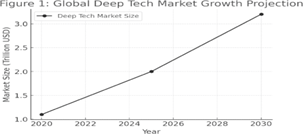
Figure 1 Global Deep Tech Market Growth (2022-2030)
LITERATURE REVIEW
The global race for deep tech leadership is fundamentally reshaping geopolitical and economic structures, with nations aggressively formulating strategic policies to gain an edge in artificial intelligence, quantum computing, semiconductors, and biotechnology. As deep tech increasingly serves as a cornerstone for national security and economic resilience, countries such as the United States, China, the European Union, and India have ramped up their investments, policy frameworks, and international collaborations to enhance their technological leadership. Porter (1990) emphasized that technological competitiveness relies on national policies that drive innovation, talent development, and industrial collaboration. Similarly, Mazzucato (2013) highlighted that state-led investments play a crucial role in the advancement of breakthrough technologies, reinforcing the idea that governments must actively support deep tech ecosystems to maintain a competitive edge. Breznitz and Murphree (2011) analyzed different national models of deep tech development, indicating that while the U.S. follows a venture-driven approach, China relies on state-backed investments, and the EU prioritizes regulatory-driven strategies. The scale of investments in deep tech is staggering, with the global deep tech market expected to reach $3.2 trillion by 2030, growing at a compound annual growth rate (CAGR) of 17% (Fig. 1). (Source: Market Research Future (2023). “Deep Tech Market Trends and Forecast 2023-2030.” www.marketresearchfuture.com )
The competition for deep tech dominance is closely linked to national security concerns, economic strategies, and geopolitical influence. A study by Kissinger et al. (2021) underscores the role of AI and emerging technologies in reshaping military capabilities and governance structures, fueling tensions between technological superpowers. The ongoing U.S.-China technology rivalry exemplifies this, with trade restrictions, intellectual property disputes, and efforts to secure critical supply chains dominating policy agendas. According to McKinsey Global Institute (2022), the U.S. and China have collectively invested over $400 billion in AI and quantum computing (Fig. 2),
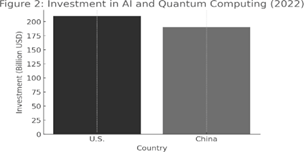 Figure 2 Investment in AI & Quantum Computing (U.S. & China, 2023)
(Source McKinsey Global Institute (2022). “AI and Quantum Computing Investments: Global Trends and Strategies.” www.mckinsey.com ) illustrating the scale of their deep tech ambitions. As nations strive for technological self-reliance, the semiconductor industry has become a focal point, with the U.S. passing the CHIPS and Science Act and China accelerating its semiconductor independence efforts through extensive government subsidies. Fig. 3 presents the impact of trade restrictions on semiconductor exports, showing a 35% decline in U.S.-China semiconductor trade between 2019 and 2023.
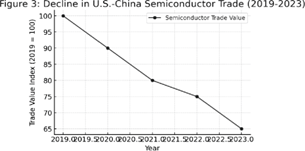 Figure 3 U.S.-China Semiconductor Trade Decline (2019-2023)
(Source Statista (2023). “Semiconductor Trade BetweenU.S. and China, 2019-2023.” www.statista.com )
Moreover, Japan, South Korea, and the European Union are increasing their semiconductor production capacity to reduce dependency onexternal sources, further intensifying competition in the global technology race. Despite the strategic importance of deep tech, several challenges persist, including talent shortages, cybersecurity risks, and regulatory complexities. The World Economic Forum (2023) highlighted that a global shortage of skilled professionals in AI, quantum computing, and biotech poses a major bottleneck for deep tech growth, with nations competing to attract and retain top-tier researchers and engineers. The Global Talent Competitiveness Index (2023) reports that the U.S. and China lead in AI talent acquisition, with over 60% of the world’s top AI researchers concentrated in these two nations (Fig. 4).
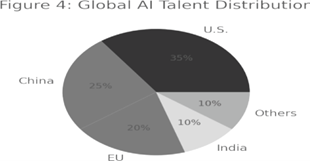 Figure 4 Global AI Talent Distribution (2023)
(Source: Global Talent Competitiveness Index (2023). “AI Talent Migration and Regional Leadership.” www.gtcindex.org )
Additionally, the regulatory landscape for deep tech remains highly fragmented. While the European Union leads in ethical AI governance and data privacy regulations through GDPR, the U.S. and China have adopted more flexible regulatory approaches to foster rapid technological
commercialization. The divergence in regulatory frame works has resulted in a fragmented deep tech ecosystem, complicating international collaboration and standardization efforts. Fig. 5 showcases the variations in AI regulatory approaches among major economies, emphasizing the differences in data governance and ethical compliance requirements.
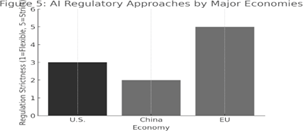 Figure 5 Variations in AI Regulatory Approaches Among Major Economies
(Source World Economic Forum (2023). “AI Governance and Data Protection Policies Across Countries.” www.weforum.org )
Cybersecurity threats are also becoming more prominent as deep tech innovations increase the risk of cyber warfare and data breaches, making international cooperation on cybersecurity policies essential for mitigating potential threats. The role of deep tech startups has also become a crucial factor in global competition, with venture capital funding for deep tech startups reaching $62 billion in 2023, a 30% increase from the previous year (Fig. 6).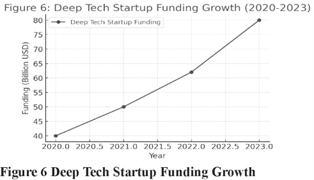 Figure 6 Deep Tech Startup Funding Growth (2020-2023)
(Source Crunch base (2023). “Global Deep Tech Startup Investment Report.” www.crunchbase.com )
Deep tech startups in AI, quantum computing, and biotechnology are attracting unprecedented levels of investment, with major economies vying to create the most conducive environments for technological entrepreneurship. Studies by Ghosh et al. (2023) suggest that nations with structured funding ecosystems, government grants, and tax incentives for deep tech startups are witnessing accelerated innovation and commercialization. Furthermore, corporate partnerships with deep tech startups have surged by 40% over the past three years, highlighting the increasing role of industry-academia collaboration in fostering technological advancements. Brynjolfsson and McAfee (2014) argued that sustained investments in research, education, and infrastructure are crucial for long-term technological leadership. Governments worldwide are allocating significant resources toward deep tech education, with initiatives such as India’s National Quantum Mission, the U.S. National AI Research Institutes, and the European Union’s Horizon Europe program aiming to cultivate a highly skilled workforce for the future. A comparative analysis by the Boston Consulting Group (2022) indicates that economies investing over 3% of their GDP in R&D, such as South Korea and Germany, are more likely to achieve sustained technological leadership (Fig. 7).
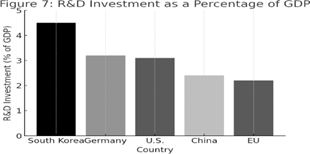 Figure 7 R&D Investment as a Percentage of GDP (Selected Economies, 2023)
(Source: Boston Consulting Group (2022). “Global R&D Expenditure and Innovation Leadership.” www.bcg.com )
This underscores the importance of sustained research funding, talent development, and policy coordination in securing a competitive edge in deep tech. As the global technological landscape continues to evolve, deep tech is expected to play a pivotal role in shaping the future of industries ranging from healthcare and energy to defense and space exploration. Recent data from the OECD (2023) indicates that AI-driven automation and quantum computing breakthroughs could boost global GDP by 7% over the next decade, reinforcing the economic significance of deep tech investments. Fig. 8 highlights the projected contribution of deep tech industries to GDP growth across major economies, emphasizing the transformative potential of these technologies. At the same time, policy decisions will remain a crucial determinant of technological leadership, as governments navigate the challenges of intellectual property rights, ethical AI governance, and cross-border collaborations. The coming years will witness intensified efforts by nations to solidify their deep tech capabilities, with an increasing focus on fostering resilient innovation ecosystems that balance economic growth, security considerations, and ethical responsibilities.
METHODOLOGY
This research adopts a qualitative approach based on secondary data analysis to explore deep tech’s role in global technological leadership and its geopolitical implications.
The study relies on data from academic journals, government reports, industry whitepapers, and institutional research from organizations such as the World Economic Forum, McKinsey Global Institute, and the Boston Consulting Group. Statistical data on investment trends, regulatory frameworks, and deep tech advancements have been extracted from market reports and policy documents to provide a comprehensive understanding of national strategies. Comparative analysis has been employed to assess the varying approaches of major economies, including the U.S., China, the European Union, and India, in fostering deep tech ecosystems. Additionally, trends in R&D investments, talent acquisition, and trade policies have been examined to highlight key challenges and opportunities. The study aims to present an integrated perspective by synthesizing insights from multiple credible sources, ensuring a data-driven evaluation of deep tech’s impact on geopolitical and economic dynamics.
FINDINGS AND DISCUSSIONS
The findings of this research highlight the growing significance of deep tech as a critical driver of global technological leadership and geopolitical influence. The analysis reveals that countries investing heavily in artificial intelligence, quantum computing, semiconductors, and biotechnology are gaining competitive advantages in both economic and national security domains. The global deep tech market is projected to reach $3.2 trillion by 2030, growing at a CAGR of 17%, reflecting its increasing relevance in shaping future economies. The United States and China lead the deep tech race, with over $400 billion in combined investments in AI and quantum computing. The importance of deep tech shows clearly in what different countries are doing. In the U.S., the CHIPS and Science Act is pushing for more domestic chip production and research. China, on the other hand, is pouring government money into tech projects to grow faster. The European Union is taking a different path. Instead of just investing money, it’s focusing on rules—like the GDPR, which protects personal data and encourages ethical AI use.
These different methods matter. They affect how well countries can compete in the tech world, how strong their supply chains are, and who they choose to partner with. The tech race is now a big part of global politics. You can see it in the growing trade restrictions and how countries are pulling away from depending on each other.
A good example: The tech fight between the U.S. and China. Since 2019, their chip trade has dropped by 35%. That’s huge. It’s made both countries try harder to make their own chips. Now, Japan, South Korea, and the EU are also working on building more chip factories. They want to stop relying too much on others.
Chips are not just about the economy anymore. They’re tied to national security used in defense, intelligence, and more. Another big issue is talent. The U.S. and China together have over 60% of the world’s best AI experts. This gap makes it hard for smaller or developing countries to keep up. So, they need to invest more in education, research, and training people. Funding for deep tech is growing. In 2023, venture capitalists put in around $62 billion, which is 30% more than the year before. More companies are also teaming up with deep tech startups up by 40% in the last three years. Countries that offer tax breaks and grants are seeing faster progress in bringing tech ideas to market. Nations like Germany and South Korea, who spend more than 3% of their GDPon R&D, are staying ahead. Governments need to keep supporting research, partner with private companies, and protect their ideas through strong IP rules.
That’s how they can stay leaders in deep tech. But there are still problems especially with AI laws. The EU has strict rules for privacy and ethics (like GDPR). The U.S. and China are more relaxed, so they can move faster. These differences are creating confusion. It’s hard to make global standards when everyone plays by different rules. Cybersecurity is also a growing concern.
As more countries use AI, quantum tech, and smart systems in their defense and infrastructure, the chances of hacking and cyber attacks go up. If these systems get breached, it can cause serious problems. Still, countries aren’t really working together on cybersecurity. They’re focused on protecting themselves. Because there’s no common set of rules, these gaps can be exploited by bad actors.
What’s needed is a global agreement something that sets the ground rules for AI safety, data protection, and cyber resilience. Without it, the same deep tech that helps us grow could also become a tool for digital warfare.
CONCLUSION
The research underscores the critical role of deep tech in shaping the future of global technological leadership, economic growth, and national security. As artificial intelligence, quantum computing, semiconductors, and biotechnology drive the next wave of industrial and geopolitical transformations, countries are intensifying their efforts to gain a competitive edge. The findings illustrate that the United States and China lead the deep tech race, collectively investing over $400 billion in AI and quantum computing, while the European Union prioritizes ethical AI governance and regulatory frameworks. Countries like Japan, South Korea, and India are also making significant strides by leveraging government-backed R&D programs, talent development initiatives, and industrial policies to enhance their technological ecosystems. The growing focus on semiconductor self-sufficiency is evident as nations seek to secure supply chains, leading to realignments in global trade and strategic alliances. However, the study also highlights persistent challenges, including talent shortages, cybersecurity risks, and fragmented regulatory landscapes that hinder the smooth integration and standardization of deep tech innovations across borders. The increasing concentration of AI talent in a few leading economies raises concerns over global disparities in technological advancement, while cybersecurity threats linked to deep tech applications demand urgent international cooperation. Ultimately, long-term technological leadership will rely on sustained investments in R&D, structured policy interventions, and robust public-private partnerships. Nations that allocate over 3% of their GDP to research and innovation, such as Germany and South Korea, are well positioned to maintain their leadership in deep tech. Additionally, fostering global collaboration on cybersecurity, regulatory harmonization, and ethical AI development will be essential for ensuring that deep tech innovations contribute to a secure, stable, and inclusive digital future. As deep tech continues to redefine power structures, policymakers must implement forward-thinking strategies that drive innovation while safeguarding economic resilience, ethical responsibility, and global security.
REFERENCES
Breznitz, D., & Murphree, M. (2011). Run of the Red
Queen: Government, Innovation, Globalization, and Economic Growth in China. Yale University Press.
Boston Consulting Group. (2022). The Global Race for Deep Tech Leadership: Investment, Innovation, and Policy Strategies. Retrieved from www.bcg.com.
Brynjolfsson, E., & McAfee, A. (2014). The Second Machine Age: Work, Progress, and Prosperity in a Time of Brilliant Technologies. W.W. Norton & Company.
European Commission. (2023). Horizon Europe: Investing in Deep Tech and Innovation. Retrieved from https://ec.europa.eu.
Ghosh, S., et al. (2023). Venture Capital and Deep Tech Startups: Global Trends and Investment Patterns. Harvard Business Review, 101(3), 78-91.
Kissinger, H., Schmidt, E., & Huttenlocher, D. (2021). The Age of AI: And Our Human Future. Little, Brown and Company.
Mazzucato, M. (2013). The Entrepreneurial State: Debunking Public vs. Private Sector Myths. Anthem Press.
McKinsey Global Institute. (2022). Deep Tech and Global Competition: Investment Trends and Policy Strategies.
Retrieved from www.mckinsey.com.
National Science Foundation. (2023). U.S. Deep Tech Funding and R&D Investment Report. Retrieved from https://nsf.gov.
Porter, M. (1990). The Competitive Advantage of Nations. Free Press.
World Economic Forum. (2023). Global Innovation Index: Deep Tech and the Future of Technological Leadership. Retrieved from https://www.weforum.org